
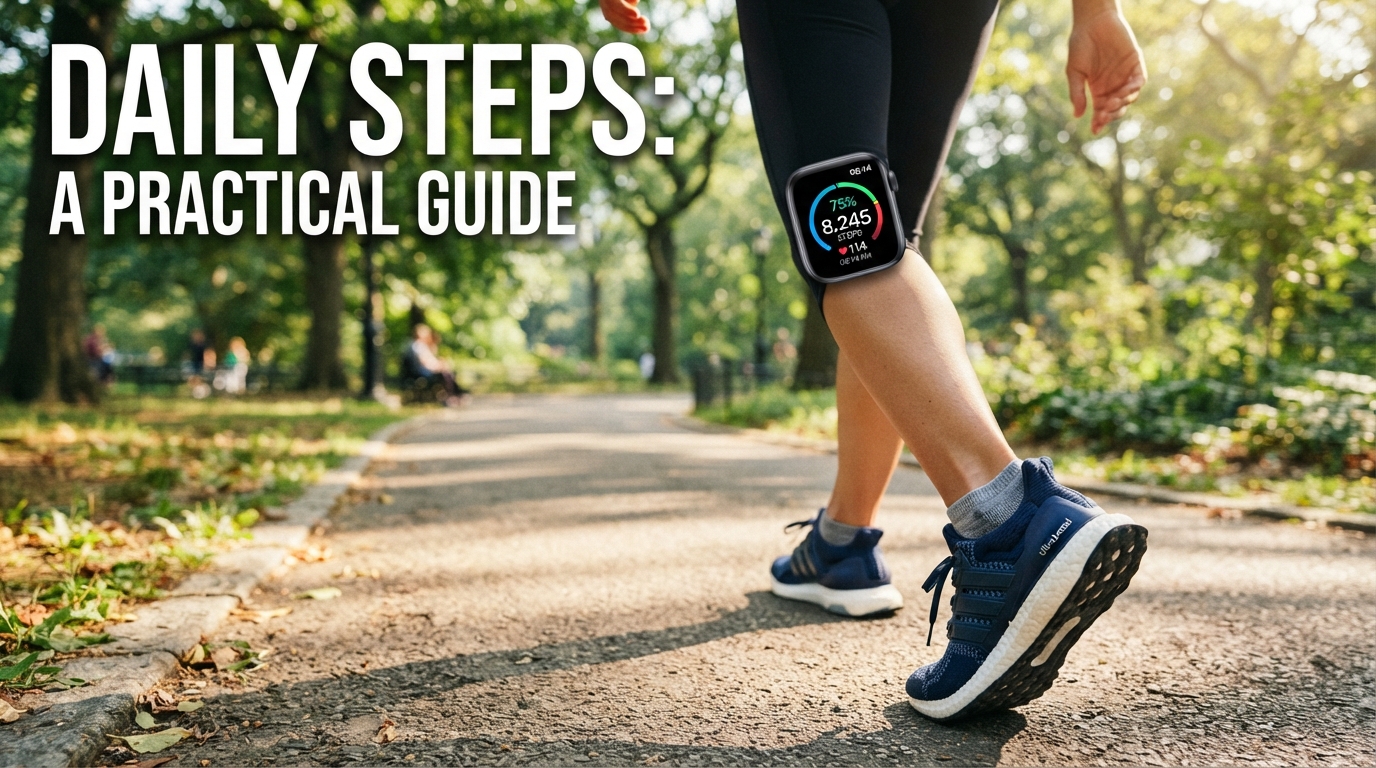
Walking is one of the simplest ways to add more movement to your day. It requires little equipment, can fit into many schedules, and can be adjusted to different fitness levels. But one question comes up again and again: how many steps should you actually walk each day?
The answer is more flexible than many people expect. There is no single daily step number that is right for everyone. Your age, current activity level, health, mobility, work routine, environment, and personal goals all matter.
Do You Really Need 10,000 Steps a Day?
The 10,000-step target is widely recognized, but it should not be treated as a universal medical requirement. Public-health recommendations generally focus more on the amount and intensity of physical activity than on reaching one specific step count.
According to the World Health Organization, adults should generally aim for at least 150 minutes of moderate-intensity aerobic physical activity per week, or an equivalent amount of vigorous activity. More activity may provide additional benefits for many people.
That means your daily step count can be useful as a practical way to understand movement, but it is only one part of the bigger picture.
Why Your Current Activity Level Matters
Instead of immediately choosing a large step target, start by understanding your normal routine. Track your movement for several typical days and look at your average.
For example, someone who currently has a mostly sedentary routine may benefit more from gradually becoming consistently active than from suddenly trying to reach an arbitrary high number every day.
A practical approach is to:
- Measure your baseline: Observe your normal activity for several days.
- Choose a realistic improvement: Add manageable periods of walking to your routine.
- Focus on consistency: A sustainable routine is usually more useful than occasional extreme activity.
- Review your progress: Look at weekly trends rather than worrying about one low-activity day.
Simple Ways to Add More Steps to Your Day
You do not necessarily need a long dedicated workout to become more active. Small periods of movement throughout the day can contribute to your overall activity.
- Take a short walk before or after work.
- Walk during part of your lunch break.
- Use the stairs when appropriate and comfortable.
- Park a little farther from your destination when practical.
- Walk while making a phone call.
- Take short movement breaks after long periods of sitting.
- Walk with family or friends.
- Explore a park or safe walking route in your area.
Steps Are Useful, but They Are Not the Whole Story
A step counter can help you recognize patterns in your daily activity, but two days with the same number of steps are not necessarily identical.
Walking pace, duration, terrain and other physical activities can all affect how demanding a day is. Strength training, cycling, swimming and other forms of exercise may also contribute significantly to your overall fitness even though they may not generate many steps.
This is why it is useful to think of step counts as an activity signal rather than a complete fitness score.
What Are the Benefits of Regular Walking?
Regular physical activity is associated with a wide range of health benefits. The World Health Organization and the U.S. Centers for Disease Control and Prevention note that physical activity can support cardiovascular health, physical function, mental wellbeing and overall health.
Walking can be an accessible way for many people to incorporate moderate activity into everyday life. The benefits depend on factors such as frequency, duration, intensity and the individual's health circumstances.
What If You Have a Low-Step Day?
One quiet day does not erase your progress.
Work demands, travel, weather, sleep, recovery and other responsibilities can all affect daily activity. Instead of treating every day as a pass-or-fail challenge, consider looking at your movement across a longer period.
Weekly patterns can often provide more useful context than a single number.
Walking Safely
Increasing activity should be gradual and appropriate for your circumstances. Comfortable footwear, safe walking surfaces, suitable clothing and awareness of weather conditions can make walking easier and safer.
In hot climates, pay particular attention to temperature and hydration and consider choosing cooler times of day or an appropriate indoor environment.
If you experience chest pain, severe shortness of breath, dizziness, or other concerning symptoms during physical activity, stop exercising and seek appropriate medical advice.
How Fitcoin Fits Into Your Walking Routine
Fitcoin is designed to help make daily movement easier to understand. Activity information can help you notice patterns, build consistency and follow your progress over time.
Depending on your account, region and current program terms, Fitcoin may also offer optional challenges, FIT point features or reward-related features. These features are intended to complement the activity experience rather than replace the health value of movement itself.
FIT points should not be viewed as guaranteed income, a fixed cash balance, or an investment. Availability, eligibility, point requirements and reward options may change according to current program terms.
A Better Goal: Build a Routine You Can Maintain
The most useful daily movement goal is not necessarily the largest number you can achieve once. It is a level of activity that encourages you to move regularly while remaining realistic for your health and lifestyle.
Start by understanding where you are today. Add movement when it is practical. Review your progress over time, and adjust your goals as your routine changes.
Daily movement is not about chasing one perfect number. It is about creating a pattern of activity that you can continue.
Trusted Sources
For additional information about physical activity recommendations and health benefits, refer to guidance published by the World Health Organization (WHO) and the U.S. Centers for Disease Control and Prevention (CDC).
Medical disclaimer: This article provides general educational information and is not medical advice. Individual activity needs can vary. If you have a medical condition, mobility limitation, are recovering from an injury, or are unsure whether an activity is appropriate for you, consult a qualified healthcare professional.