You finish lunch, return to your desk and suddenly keeping your eyes open feels harder than it did 20 minutes ago.
Or maybe it happens after dinner: you eat a large meal, sit down and quickly feel ready for a nap.
Feeling sleepy after eating is common enough to have a name: postprandial somnolence, sometimes casually called a “food coma.”
But why does it happen?

Post-meal sleepiness is common, particularly after larger meals and during the natural afternoon decline in alertness.
Is Feeling Sleepy After Eating Normal?
Often, yes.
Post-meal drowsiness is a recognized phenomenon, and not everyone experiences it to the same degree.
The effect may depend on several factors, including how much you ate, what you ate, what time you ate and how well you slept the night before.
One older laboratory study found that post-meal sleepiness was not an inevitable response in every participant, supporting the idea that individual responses vary.
First, Forget the “Blood Leaves Your Brain” Myth
A popular explanation says you become sleepy because digestion pulls blood away from your brain and sends it to your stomach.
That explanation is misleading.
Scientific discussion of post-meal sleepiness has challenged the idea that a major reduction in blood flow to the brain is responsible.
Your body is capable of supporting digestion while maintaining the blood supply needed by your brain.
1You Ate a Very Large Meal
The simplest explanation may be the size of the meal.
Many people notice that a light lunch affects them differently from a huge restaurant meal.
Large meals can intensify the post-meal feeling of relaxation and drowsiness.
Research into postprandial sleepiness has found that meal volume and composition can influence how sleepy some people feel afterward.
Think about the difference
2Your Meal Was Heavy in Refined Carbohydrates
Meal composition may also influence how you feel afterward.
Foods rich in rapidly digested carbohydrates can produce a different glucose and insulin response from meals built around protein, fiber and less-refined carbohydrates.
Examples of refined or sugary foods include:
- Sugary drinks.
- Candy and sweets.
- Pastries.
- Large portions of white bread.
- Some refined breakfast cereals.
- Large portions of other highly processed carbohydrates.
This does not mean carbohydrates automatically make you sleepy or that you should eliminate them.
Whole grains, fruit, vegetables, beans and other carbohydrate-containing foods can be important parts of a healthy diet.
3You Are Experiencing the Natural Afternoon Slump
Sometimes lunch receives the blame for something your body was already preparing to do.
Your circadian rhythm helps regulate when you feel awake and when you feel sleepy.
Alertness naturally tends to decline for many people during the early afternoon.
If lunch happens at roughly the same time, the normal circadian dip and post-meal effects can overlap.
You may feel sleepy after lunch partly because you ate — and partly because it is afternoon.
This helps explain why some people experience an afternoon slump even when their lunch is not unusually large.
4You Did Not Sleep Well the Night Before
A meal may reveal tiredness that was already there.
If you are sleep deprived, your ability to maintain alertness during naturally quieter periods of the day is reduced.
You might feel relatively alert while working, commuting or drinking coffee in the morning, then suddenly notice your sleep debt when you sit down after lunch.
Consider:
- How many hours you normally sleep.
- Whether your sleep schedule changes significantly between days.
- Whether you wake repeatedly during the night.
- Whether you wake feeling refreshed.
- Whether you regularly need naps just to function.
5Alcohol Is Part of the Meal
If your meal includes alcohol, it may contribute to feeling drowsy afterward.
Alcohol can have sedating effects, so a large dinner accompanied by alcoholic drinks can create a very different experience from the same meal with water.
This is also one reason why blaming a single food — such as turkey — can be misleading.
Harvard Health notes that the famous idea that turkey uniquely causes a “food coma” because of tryptophan is largely a myth.
Turkey does contain tryptophan, but so do many other protein-rich foods, and the amount in an ordinary serving is unlikely to explain dramatic sleepiness by itself.
Feeling sleepy after a holiday dinner is more plausibly related to the overall large meal, the timing, alcohol and other factors than to turkey alone.
6Your Blood Sugar May Be Dropping After the Meal
This reason requires more caution.
Some people can experience reactive hypoglycemia, also called postprandial hypoglycemia.
Mayo Clinic describes this as blood glucose falling after a meal, usually within about four hours of eating.
Possible symptoms can include:
- Weakness or tiredness.
- Shakiness.
- Sweating.
- Hunger.
- Dizziness or lightheadedness.
- Headache.
- Irritability or anxiety.
- Fast or irregular heartbeat.
- Confusion.
If episodes include shaking, sweating, confusion, significant weakness or other symptoms suggestive of hypoglycemia, medical evaluation is appropriate.
7Your Overall Glucose Regulation May Need Attention
Fatigue can also occur in people with diabetes, but sleepiness after a meal alone is not enough to diagnose diabetes.
According to the CDC, possible symptoms of diabetes include:
- Frequent urination.
- Increased thirst.
- Increased hunger.
- Unexplained weight loss.
- Fatigue.
- Blurred vision.
- Frequent urinary tract or yeast infections.
Type 2 diabetes may also develop gradually and can initially cause few or no obvious symptoms.
If you are concerned about diabetes, testing by a healthcare professional is more useful than trying to diagnose yourself based on how you feel after eating.
8The Real Problem May Be Your Sleep, Not Your Food
If you get enough time in bed but still struggle with strong daytime sleepiness, poor sleep quality may be involved.
One condition worth knowing about is obstructive sleep apnea.
The National Heart, Lung, and Blood Institute lists daytime sleepiness and tiredness among possible symptoms of sleep apnea.
Other possible signs include:
- Loud, frequent snoring.
- Breathing that starts and stops during sleep.
- Gasping for air while asleep.
- Waking frequently during the night.
- Morning headaches.
- Difficulty concentrating.
Someone may think, “Food always makes me sleepy,” when the underlying issue is that they were excessively sleepy before the meal as well.
What About Tryptophan?
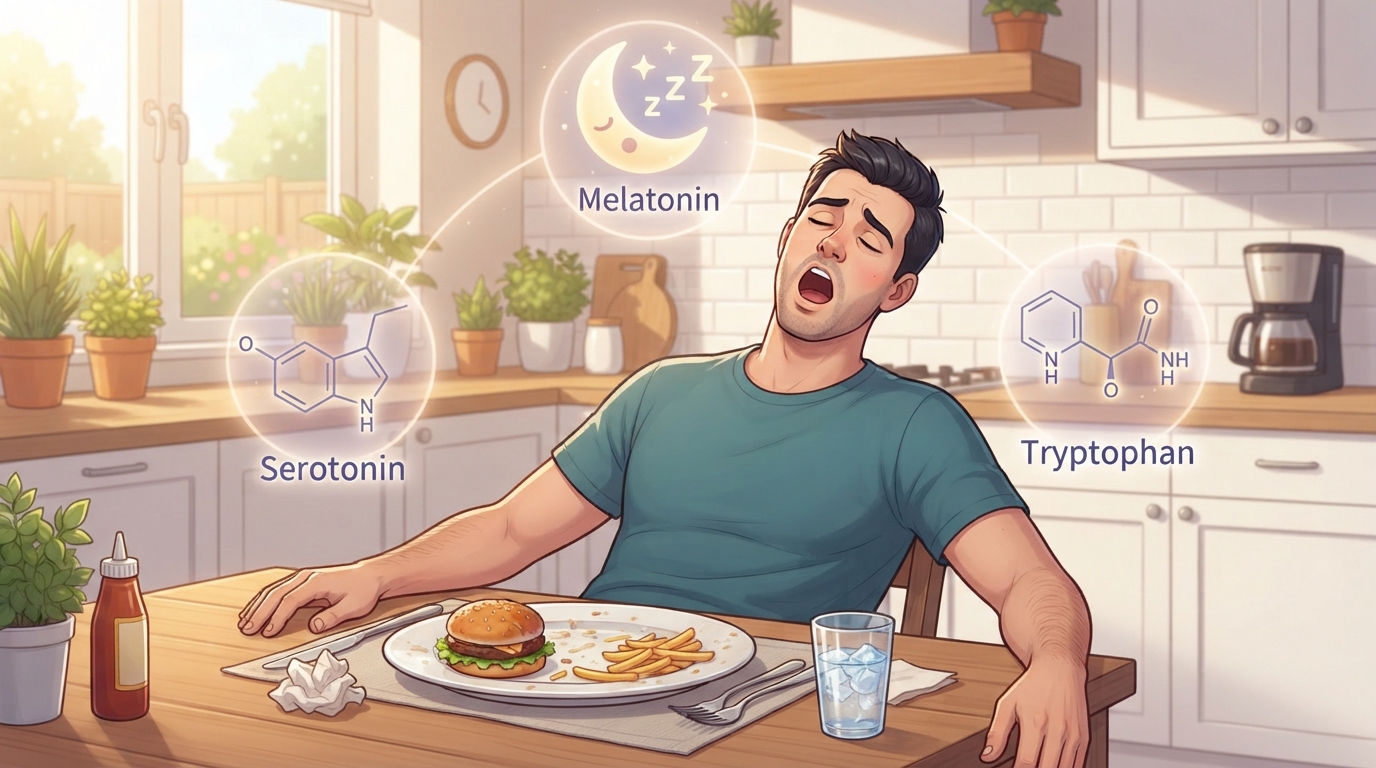
Tryptophan is a real amino acid involved in processes that ultimately relate to serotonin and sleep regulation.
But blaming one tryptophan-containing food for post-meal sleepiness oversimplifies the issue.
Harvard Health notes that turkey contains an amount of tryptophan similar to several other common protein foods and that an ordinary serving does not provide anything close to the amounts used in tryptophan supplements.
So if you become sleepy after a large meal, do not automatically blame the chicken, turkey or another single ingredient.
Does Digestion Really Make You Tired?
Eating triggers a complex series of digestive, metabolic, hormonal and nervous-system responses.
Research has proposed that signals between the digestive system and brain may contribute to post-meal changes in alertness.
But the exact mechanism is more complex than the familiar claim that all your blood suddenly moves to your stomach.
How to Reduce Sleepiness After Eating
If your post-meal sleepiness is mild and there are no concerning symptoms, a few practical changes may help.
1. Try a smaller meal
If your biggest energy crash follows your biggest meal, experiment with portion size.
2. Build a more balanced plate
Include protein, vegetables, fiber-rich foods and appropriate portions of carbohydrates rather than making the meal almost entirely refined starch or sugar.
3. Drink enough water
Keep hydration consistent throughout the day rather than relying on sugary drinks or excessive caffeine.
4. Take a short walk
Instead of immediately sitting or lying down after lunch, consider a light walk if it is appropriate for you.
5. Protect your nighttime sleep
Improving meal composition will not compensate for consistently inadequate or poor-quality sleep.
6. Watch alcohol intake
Alcohol can contribute to drowsiness and may make a large meal feel even more sedating.
A Simple 7-Day Experiment
If you want to understand your own pattern, keep a simple record for one week.
| Track | What to Record |
|---|---|
| Sleep | Approximate bedtime, wake time and how rested you felt |
| Meal time | When you started eating |
| Meal size | Small, moderate or large |
| Meal type | Main foods and drinks |
| Sleepiness | Rate it from 1 to 10 about 30-120 minutes afterward |
| Caffeine | What you drank and approximately when |
| Alcohol | Whether alcohol was part of the meal |
| Other symptoms | Shaking, sweating, dizziness, thirst, headache or other unusual symptoms |
You may discover that the problem is not “every time I eat.”
It may be specifically after very large lunches, after poor sleep, during the early afternoon or after particular meal patterns.
When Should You Talk to a Doctor?
Occasional mild sleepiness after a large meal is usually very different from excessive daytime sleepiness that interferes with normal life.
Consider medical evaluation if:
- You become extremely sleepy after most meals.
- You regularly fall asleep unintentionally during the day.
- Sleepiness affects your ability to work or concentrate.
- You snore loudly or someone notices pauses in your breathing while you sleep.
- You wake after sufficient time in bed but rarely feel refreshed.
- You have frequent thirst and urination or unexplained weight changes.
- You experience shaking, sweating, dizziness or confusion after meals.
- The problem is new, severe or progressively worsening.
Normal Afternoon Slump vs Something Worth Checking
| Situation | What It May Suggest |
|---|---|
| Mild sleepiness after a very large lunch | Can occur as part of normal post-meal drowsiness |
| Sleepiness mainly in early afternoon | Circadian timing may contribute |
| Tired after poor nighttime sleep | Sleep debt may be the bigger factor |
| Shaking, sweating and dizziness after eating | Blood glucose should be considered and medically evaluated if recurrent |
| Constant thirst, frequent urination and fatigue | Symptoms warrant medical assessment, including consideration of diabetes |
| Loud snoring plus severe daytime sleepiness | A sleep disorder such as sleep apnea may need evaluation |
Frequently Asked Questions
Why do I get sleepy immediately after eating?
Meal size and composition, circadian timing and your existing level of sleepiness can all contribute. Mild post-meal drowsiness can be normal.
Does eating carbohydrates make you sleepy?
Meal composition can influence post-meal alertness, but carbohydrates should not all be treated as the same. Refined sugary foods differ nutritionally from whole grains, fruit, vegetables and legumes.
Does feeling sleepy after eating mean I have diabetes?
No. Sleepiness after eating alone does not diagnose diabetes. Diabetes can cause fatigue, but clinicians look at symptoms together with appropriate blood tests.
Can low blood sugar make you sleepy after eating?
Reactive hypoglycemia can occur after meals and may cause weakness or tiredness, often along with symptoms such as shakiness, sweating, hunger, dizziness or confusion. It should not be assumed based on sleepiness alone.
Why am I sleepy after lunch but not breakfast?
The natural early-afternoon decline in alertness may overlap with lunch. Lunch size and composition may also differ from breakfast.
Does turkey really make you sleepy?
Not in the special way often claimed. Turkey contains tryptophan, but ordinary portions contain amounts similar to several other protein foods. The overall size of a meal and other factors are more plausible explanations for the classic holiday “food coma.”
How can I stop feeling sleepy after lunch at work?
Try avoiding very large lunches, build a balanced meal, stay hydrated, take a short walk and make sure you are getting sufficient quality sleep at night.
The Bottom Line
Feeling a little sleepy after eating does not automatically mean something is wrong.
Your meal, the time of day and how well you slept can all affect your alertness.
But severe post-meal sleepiness deserves more attention when it happens repeatedly or appears alongside symptoms such as shaking, sweating, excessive thirst, frequent urination, loud snoring or breathing pauses during sleep.
- Sleep Foundation - Why You Get Sleepy After Eating
- Mayo Clinic - Reactive Hypoglycemia
- CDC - Symptoms of Diabetes
- NHLBI - Sleep Apnea Symptoms
- Harvard Health - The Turkey Coma: Fact or Fiction?
- PubMed - Postprandial Somnolence and Blood Flow Myth
- PubMed - Meal Composition and Postprandial Sleepiness