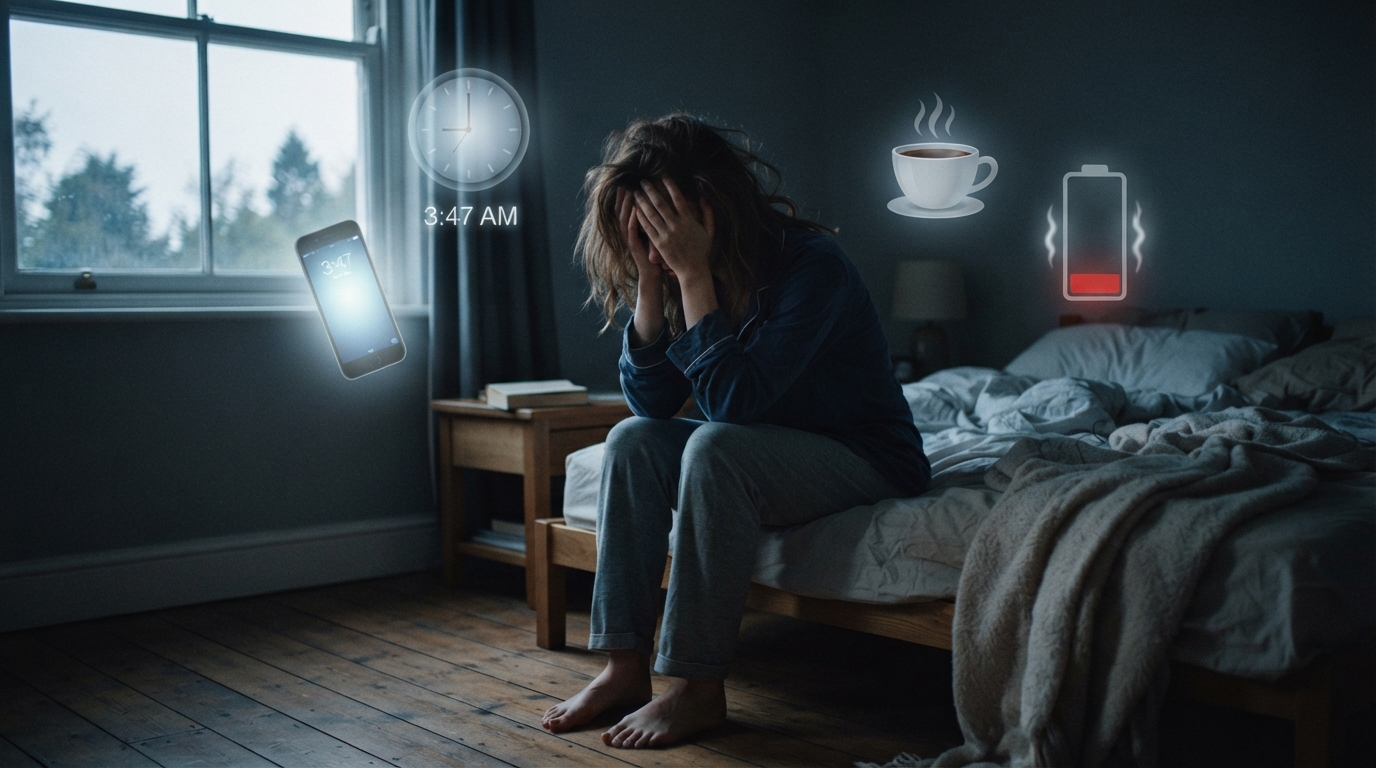
You go to bed on time, sleep for what feels like a full night, wake up in the morning — and still feel exhausted.
It can be frustrating, especially when the obvious answer seems to be: “I just need more sleep.”
But sleep duration is only part of the story.
How well you sleep, whether your sleep is repeatedly interrupted, your daily habits, stress levels, medications and certain medical conditions can all affect how rested you feel the next day.

Sleeping for many hours does not always mean your sleep was restorative.
Feeling Tired vs. True Fatigue
Feeling sleepy after a late night or exhausted after an unusually busy day is normal.
Persistent fatigue is different.
Mayo Clinic describes fatigue as a symptom that can reduce energy, concentration and the ability to perform normal activities. It may come from lifestyle factors, medications, emotional health or an underlying medical condition.
If rest does not seem to restore your energy, it is worth paying attention to the pattern rather than simply trying to sleep longer.
1Your Sleep May Be Long Enough but Not Deep Enough
Eight hours in bed does not necessarily equal eight hours of restorative sleep.
Your sleep can be fragmented by:
- Noise.
- Temperature.
- Light.
- Stress.
- Alcohol.
- Caffeine too late in the day.
- Nicotine.
- Frequent awakenings.
- Sleep disorders.
You may not remember every brief awakening.
But repeated interruptions can prevent you from spending enough time in deeper, restorative stages of sleep.
2Sleep Apnea Could Be Interrupting Your Sleep
One important possibility is obstructive sleep apnea.
Sleep apnea causes breathing to repeatedly stop or become restricted during sleep. These interruptions can repeatedly disturb sleep even when the person does not consciously remember waking.
According to NHS and Mayo Clinic, possible signs include:
- Loud snoring.
- Breathing pauses noticed by another person.
- Gasping or choking during sleep.
- Frequent waking.
- Morning headaches.
- Difficulty concentrating.
- Excessive daytime sleepiness.
3Iron-Deficiency Anemia
Iron deficiency can lead to iron-deficiency anemia, a condition in which the body does not have enough healthy red blood cells to carry oxygen effectively.
Fatigue is a common symptom.
Other possible symptoms may include:
- Weakness.
- Shortness of breath.
- Pale skin.
- Noticeable or rapid heartbeat.
- Dizziness in some people.
However, fatigue alone cannot tell you whether you have iron deficiency.
4Your Thyroid May Be Involved
The thyroid gland helps regulate metabolism and many important body processes.
Both an underactive thyroid and an overactive thyroid can be associated with fatigue.
Because thyroid symptoms can overlap with many other conditions, fatigue alone is not enough to identify a thyroid problem.
If symptoms persist, a clinician may decide that blood testing is appropriate.
5Stress and Anxiety Can Follow You Into Bed
You may physically be in bed while your brain remains highly alert.
Work pressure, financial concerns, family issues, uncertainty or persistent worry can interfere with both falling asleep and staying asleep.
Stress can also make sleep feel less refreshing even when the total time in bed looks adequate.
- Thinking about work while trying to sleep.
- Repeatedly checking the time.
- Waking with racing thoughts.
- Feeling mentally exhausted before the day begins.
6Depression and Other Mental Health Conditions
Fatigue and changes in sleep can occur with depression and other mental health conditions.
Some people sleep less.
Others may sleep for long periods yet still feel exhausted.
Fatigue can also occur alongside:
- Low mood.
- Loss of interest or pleasure.
- Difficulty concentrating.
- Changes in appetite.
- Changes in sleep patterns.
Persistent fatigue should not automatically be assumed to be psychological, but emotional and physical health can strongly affect one another.
7Your Sleep Schedule Is Inconsistent
Going to bed at 10:30 PM one night, 2:00 AM the next and sleeping until noon on weekends can make your sleep schedule difficult to regulate.
The body benefits from regular timing.
A more consistent wake-up time may help establish a steadier sleep-wake rhythm.
8Alcohol, Caffeine or Nicotine May Be Affecting Sleep Quality
Some habits can affect sleep even if you still manage to stay in bed for many hours.
Caffeine
Caffeine can remain active for hours and may make it harder for some people to fall asleep or maintain high-quality sleep when consumed too late.
Alcohol
Alcohol may initially make a person feel sleepy, but it can disrupt sleep later in the night.
Nicotine
Nicotine is a stimulant and may also contribute to disrupted sleep.
Individual sensitivity differs, so observing your own habits can be useful.
9A Medication Could Be Contributing
Some medications can cause tiredness, drowsiness or disrupted sleep.
Mayo Clinic notes that medicines can be among the causes of fatigue.
Examples can include some:
- Allergy medicines.
- Pain medicines.
- Antidepressants.
- Heart medicines.
- Other prescription or over-the-counter products.
10Another Medical Condition May Need Attention
Fatigue is a very broad symptom.
According to major medical sources, it can occur with many conditions, including:
- Diabetes.
- Kidney disease.
- Chronic infections.
- Heart conditions.
- Vitamin deficiencies.
- Hormonal changes.
- Fibromyalgia.
- ME/CFS.
- Other chronic illnesses.
This does not mean that persistent tiredness indicates a serious disease.
It means fatigue has many possible causes, which is why persistent symptoms are better evaluated than guessed.
Clues That May Help You Describe the Problem
| What You Notice | What to Discuss With a Healthcare Professional |
|---|---|
| Loud snoring, gasping or witnessed breathing pauses | Possible sleep-disordered breathing such as sleep apnea |
| Fatigue with pale skin, shortness of breath or palpitations | Whether testing for anemia or another cause is appropriate |
| Fatigue with major changes in weight, temperature tolerance or other symptoms | Whether thyroid or other hormonal evaluation is appropriate |
| Feeling exhausted despite adequate time in bed | Sleep quality, sleep disorders, medication and medical causes |
| Persistent fatigue with low mood or anxiety | Mental health and sleep quality |
| Tiredness that started after a new medicine | Possible medication side effects |
This table is not a diagnostic tool. Similar symptoms can have many different causes.
What Can You Try Before Assuming Something Is Wrong?
If your tiredness is mild and recent, improving basic sleep and lifestyle habits may help.
Could Sleeping More Actually Make You Feel Worse?
More sleep is not always the solution.
If your sleep is poor quality or repeatedly interrupted, simply extending the number of hours may not address the problem.
Some people may also feel groggy after unusually long periods of sleep.
The goal should be adequate, regular and restorative sleep rather than simply spending as many hours as possible in bed.
When Should You See a Doctor?
The NHS advises seeking medical advice when tiredness has continued for a while, cannot be explained and is not improving.
Consider making an appointment if:
- You regularly feel exhausted despite adequate sleep.
- The fatigue has lasted for weeks or is getting worse.
- It interferes with work, driving or normal daily activities.
- You have loud snoring, choking or pauses in breathing during sleep.
- You have unexplained weight changes.
- You have persistent shortness of breath or palpitations.
- You have symptoms suggesting depression or another mental health concern.
- Your fatigue started after beginning a new medication.
What Might a Doctor Check?
There is no single test that explains every case of fatigue.
A healthcare professional may begin by asking about:
- Your sleep schedule.
- Snoring and breathing during sleep.
- Medications.
- Diet.
- Stress and mental health.
- Physical activity.
- Other symptoms.
Depending on your history and symptoms, testing may be considered for conditions such as anemia, thyroid disorders, diabetes or other possible causes.
If a sleep disorder is suspected, further sleep evaluation or a sleep study may sometimes be recommended.
A Simple 7-Day Fatigue Diary
Before a medical appointment, keeping a short diary can make your symptoms easier to explain.
| Track | What to Record |
|---|---|
| Bedtime | When you tried to sleep |
| Wake time | When you got out of bed |
| Night awakenings | How often you remember waking |
| Morning energy | Rate from 1 to 10 |
| Daytime sleepiness | When you feel most tired |
| Caffeine and alcohol | What and when you consumed them |
| Other symptoms | Headaches, snoring, breathlessness, mood changes or anything unusual |
Frequently Asked Questions
Why am I still tired after sleeping eight hours?
Eight hours in bed does not guarantee restorative sleep. Poor sleep quality, repeated awakenings, sleep apnea, stress, medications and medical conditions can all contribute to persistent tiredness.
Can sleep apnea make me tired even if I sleep all night?
Yes. Sleep apnea can repeatedly interrupt breathing and sleep throughout the night. Some people do not remember these awakenings but still experience significant daytime sleepiness or fatigue.
Can low iron make me tired?
Iron-deficiency anemia can cause fatigue, weakness and shortness of breath. Symptoms alone cannot diagnose iron deficiency, so testing and professional assessment may be needed.
Can stress make sleep feel unrefreshing?
Yes. Stress and anxiety can interfere with falling asleep, staying asleep and feeling restored the next day.
Should I take vitamins if I am always tired?
Not automatically. Fatigue has many possible causes, and taking supplements without knowing whether you have a deficiency may not solve the problem. Discuss persistent fatigue with a healthcare professional.
When is tiredness a reason to worry?
Seek medical advice when fatigue is persistent, unexplained, worsening or interfering with daily life. Urgent symptoms such as chest pain, severe breathing difficulty or fainting require immediate medical attention.
Final Takeaway
If you regularly wake up tired, the answer is not always “sleep more.”
The quality and continuity of your sleep matter just as much as the number of hours you spend in bed.
Start by looking at your sleep schedule, caffeine, alcohol, stress and nighttime environment.
But if the tiredness continues, becomes severe or comes with other symptoms, do not rely on guesswork.
Conditions such as sleep apnea, anemia, thyroid disorders and other health problems can contribute to fatigue and may require professional evaluation.