AI Smart Glasses Are Booming: Could They Become the Next Smartphone?
Artificial intelligence is moving from phones and computers onto our faces. AI-powered smart glasses are becoming one of the fastest-growing categories in wearable technology, raising a much bigger question: could glasses eventually become a major everyday computing platform?
Global AI glasses shipments reached approximately 4.2 million units during the first half of 2026, according to Omdia, representing year-on-year growth of 127 percent. The numbers suggest that smart glasses are moving beyond a small experimental category.
Article Contents
Why Are AI Smart Glasses Suddenly Everywhere?
Smart glasses are not a completely new idea. Technology companies have experimented with wearable displays and connected eyewear for more than a decade.
What has changed is artificial intelligence.
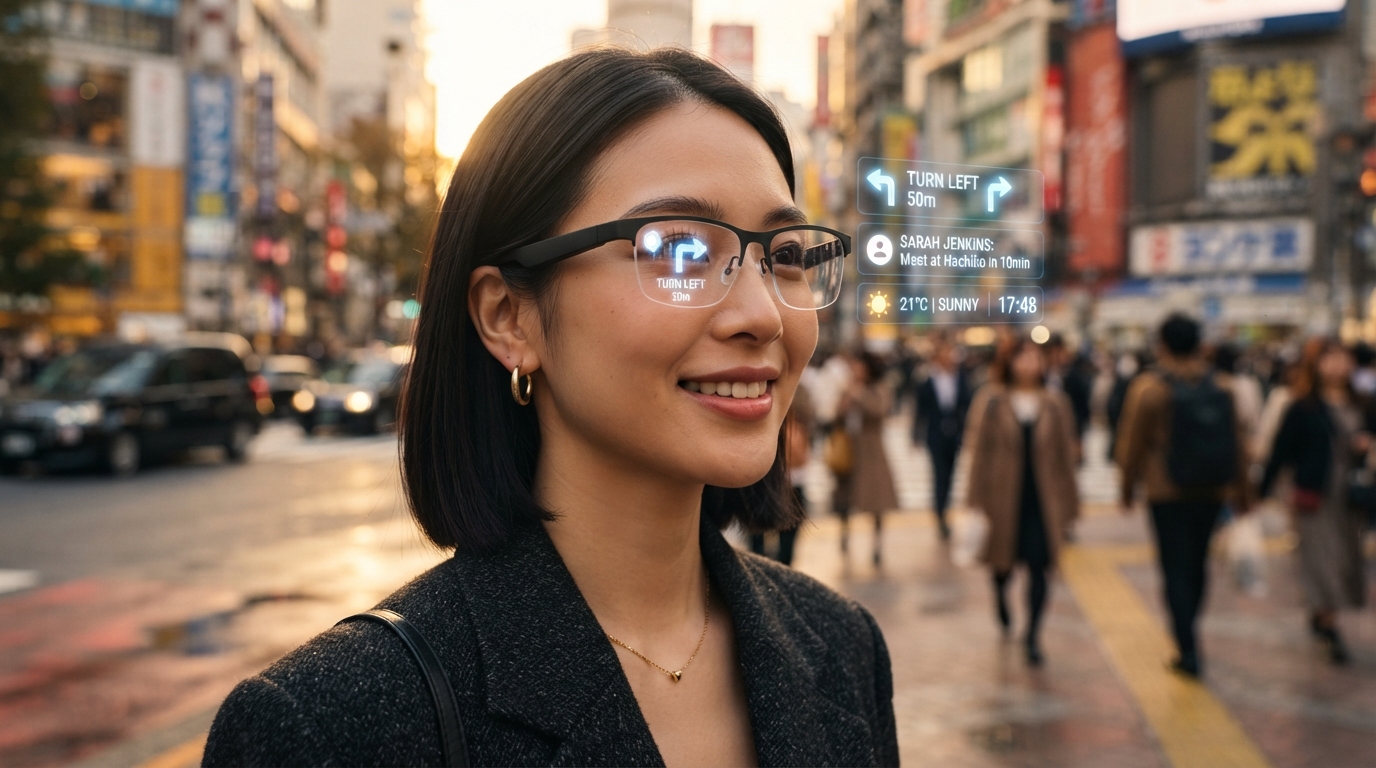
Earlier smart glasses often depended on displays, cameras or basic notifications. The newest generation can combine microphones, cameras, speakers, sensors and AI assistants to understand spoken questions and, on some devices, interpret what the wearer is seeing.
This creates a different type of computer: one that can potentially interact with the user while they continue looking at the real world.
The smartphone requires users to look down at a screen. Smart glasses are being developed around the opposite concept: bringing digital assistance into the user's natural field of activity.
The AI Glasses Market Is Growing Rapidly
The first half of 2026 provided a strong signal that consumer interest in AI eyewear is increasing.
According to Omdia, worldwide AI glasses shipments reached 4.2 million units during the first six months of 2026. That represented growth of 127 percent compared with the same period a year earlier.
The market remains relatively young, but rapid growth is attracting more companies and encouraging experimentation with different designs.
Some products resemble conventional glasses and focus on cameras, audio and AI assistance. Others include displays capable of placing digital information directly in front of the wearer.
Successful consumer technology often becomes important when it stops looking like experimental technology. Smart glasses are increasingly being designed to resemble ordinary eyewear rather than futuristic headsets.
Artificial Intelligence Could Be the Missing Ingredient
The biggest difference between earlier generations of smart glasses and today's devices is the rapid improvement of AI assistants.
An AI-enabled wearable can potentially receive spoken questions, understand context, identify objects through a camera and provide information through built-in speakers or a visual display.
This creates the possibility of interacting with computing without constantly touching a screen.
The future of wearable computing may not be about putting a smaller smartphone on your face. It may be about creating an AI assistant that can experience the world alongside you.
That difference could eventually make glasses an important interface for artificial intelligence.
What Can AI Smart Glasses Actually Do?
Capabilities vary significantly between products, but modern smart glasses can combine several functions that previously required separate devices.
- Take hands-free photos and videos.
- Play music and podcasts through open-ear audio.
- Make and receive calls.
- Interact with AI assistants using voice.
- Identify or describe objects using cameras and AI.
- Provide navigation assistance on supported devices.
- Translate or interpret information.
- Display digital information on AR-capable models.
The long-term goal is increasingly clear: technology companies want wearable devices to provide useful digital assistance without forcing users to repeatedly pull a phone from their pocket.
Could Smart Glasses Replace Smartphones?
Replacing the smartphone completely remains a difficult challenge.
Phones have large displays, powerful processors, excellent cameras and batteries capable of supporting many hours of intensive use. They are also private: information displayed on a phone is usually visible only to the person holding it.
Smart glasses face very different engineering limitations. They need to remain lightweight, comfortable and socially acceptable while containing batteries, processors, microphones, speakers, sensors and potentially cameras or displays.
A more realistic near-term possibility is that smart glasses become a companion to smartphones before they ever become a replacement.
Current smart glasses cannot replace the full range of applications and functions available on modern smartphones. The transition, if it happens at all, is likely to be gradual.
Smart Glasses Could Become a Workplace Tool
Consumer applications are only part of the opportunity.
Hands-free computing could be particularly useful for technicians, warehouse employees, engineers, healthcare workers and other professionals who need information while their hands remain occupied.
A technician could theoretically look at equipment while receiving instructions. Warehouse employees could see information about inventory. Remote specialists could potentially assist workers while seeing the same environment through a wearable camera.
Snap, for example, has announced enterprise initiatives for its Specs platform as companies explore how wearable computing could fit into professional workflows.
The Biggest Challenge May Be Privacy
Smart glasses create a problem that smartphones do not create in exactly the same way: people nearby may not always know when a wearable device is collecting information.
Camera-equipped glasses have therefore generated concerns about recording, consent, facial recognition and the handling of potentially sensitive images and audio.
Privacy concerns have become significant enough that some companies are exploring camera-free designs and more visible recording indicators.
For smart glasses to become an everyday technology, companies may need to convince not only the person wearing the device but also the people standing around them that the technology can be used responsibly.
This means privacy could become just as important as battery life, design or artificial intelligence when determining whether smart glasses reach mass adoption.
What Could AI Glasses Look Like by 2030?
The technology is still developing rapidly, making precise predictions difficult. However, several directions are becoming visible.
Future glasses could become lighter, offer longer battery life and provide more powerful AI assistance. Display technology could improve while processors become more energy efficient.
AI assistants may also become increasingly contextual, potentially understanding the user's schedule, surroundings, tasks and preferences.
- More natural voice interaction.
- Real-time translation.
- Visual AI that understands surroundings.
- Turn-by-turn navigation.
- Live notifications and information.
- Hands-free workplace assistance.
- More advanced augmented reality.
The smartphone put the internet in our pockets. AI glasses are attempting to put digital intelligence directly into our everyday view of the world.
Smartphone vs AI Smart Glasses
| Feature | Smartphone | AI Smart Glasses |
|---|---|---|
| Interaction | Touchscreen | Voice, camera, gestures and AI |
| Hands-Free Use | Limited | Major advantage |
| Screen | Large high-resolution display | None or compact AR display |
| AI Context | Apps and phone sensors | Potential real-world visual context |
| Battery | Generally strong | Still a major challenge |
| Privacy | More familiar social norms | Significant camera and recording concerns |
| Market Maturity | Mass market | Fast-growing emerging category |
Frequently Asked Questions
What are AI smart glasses?
AI smart glasses are wearable devices that combine traditional eyewear with digital features such as microphones, speakers, cameras, sensors, AI assistants and, on some models, augmented-reality displays.
Are AI glasses becoming popular?
Yes. Omdia reported that global AI glasses shipments reached approximately 4.2 million units during the first half of 2026, representing 127 percent year-on-year growth.
Can smart glasses replace a smartphone?
Current devices cannot fully replace modern smartphones. In the near term, smart glasses are more likely to operate alongside phones while gradually taking over selected hands-free tasks.
Why is AI important for smart glasses?
AI allows wearable devices to interpret voice commands and potentially understand visual information from the wearer's surroundings, making interaction more contextual and useful.
Are smart glasses a privacy risk?
Camera-equipped wearables raise legitimate questions about recording and consent. Manufacturers are experimenting with indicators, controls and camera-free designs to address these concerns.
Could smart glasses become mainstream by 2030?
The category is growing rapidly, but mainstream adoption will depend on improvements in price, comfort, battery life, AI usefulness, design and public trust.
Conclusion
AI smart glasses are becoming one of the most interesting battles in consumer technology.
With global shipments reaching millions of units and major technology companies investing in wearable AI, the category is beginning to move beyond experimental hardware.
Artificial intelligence could provide the missing ingredient that earlier generations of smart glasses lacked: a useful reason to have a computer continuously available at eye level.
Major challenges remain. Battery life, cost, comfort, privacy and social acceptance will determine how quickly the technology develops.
The smartphone is unlikely to disappear soon. But if AI glasses continue improving, the device that eventually changes how we interact with smartphones may already be sitting on our faces.
Omdia — Global AI glasses shipments more than doubled in the first half of 2026.
Reuters — Smart glasses, AI wearables and growing global privacy concerns, September 2026.
Snap — Specs and AI-powered wearable computing developments.